Historical Accuracy Matters: Rename the African Burial Ground National Monument back to Negroes Burial Ground

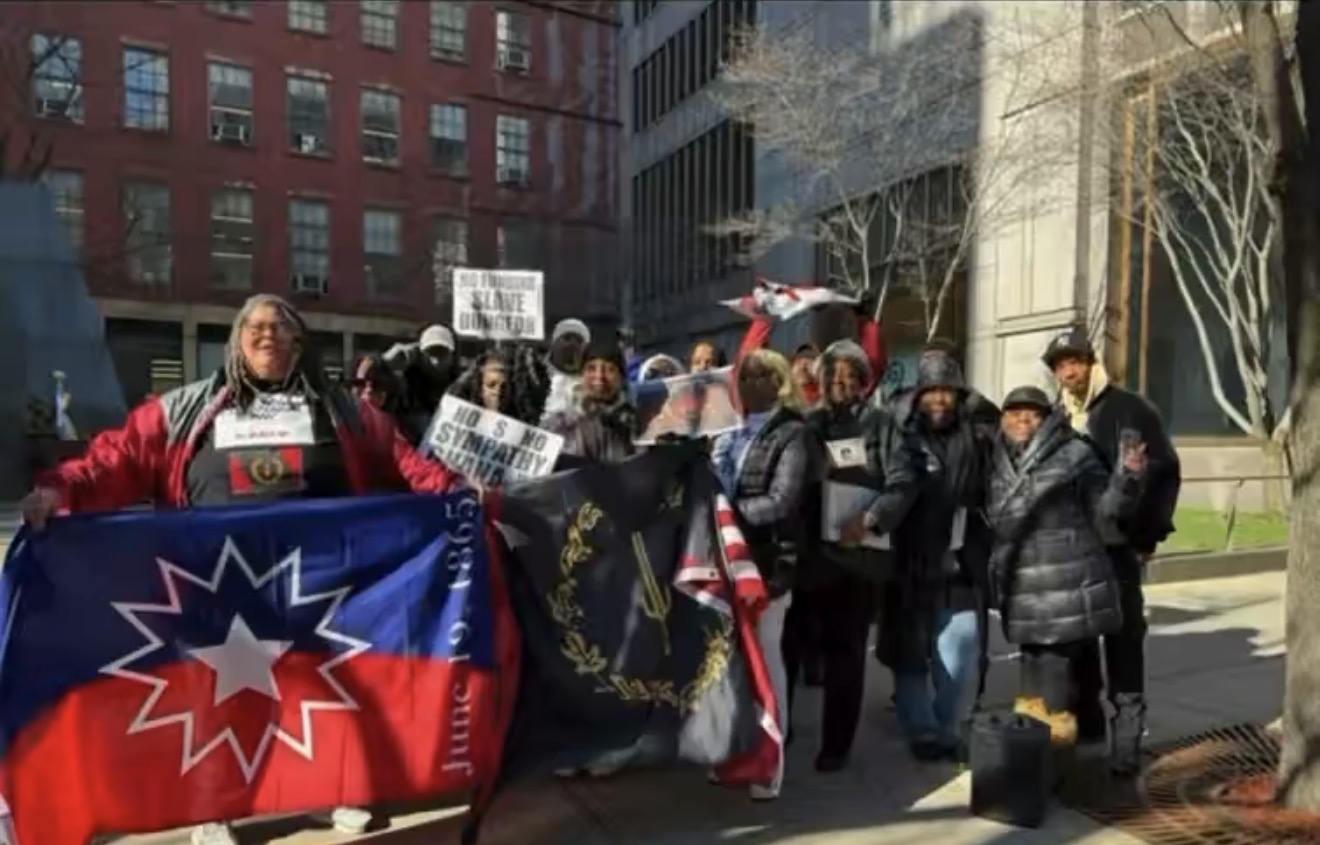
The site currently known as the African Burial Ground National Monument is often presented as a symbol of recognition and respect. But for many Foundational Black Americans—descendants of chattel slavery in the United States—it represents something far more troubling: the rewriting of identity, the sidelining of descendant voices, and the continued use of our history without accountability.
At its core, this issue begins with the name.
Historical records from colonial New York consistently referred to the site as the “Negroes Burial Ground.” That was the designation used during the lifetimes of the people buried there. While the term “Negro” is outdated today, it reflects the actual historical classification of those individuals. Renaming the site “African Burial Ground” imposes a different identity onto them after death—one that was not used to describe them while they lived.
This is not a minor semantic shift. It raises a fundamental question: who has the authority to redefine a people’s identity after they are gone?
The Discovery and Disturbance of a Sacred Site
The burial ground came back into public awareness in 1991 during federal construction in lower Manhattan. As excavation began for a government building, human remains were uncovered—ultimately more than 400 individuals. These were men, women, and children buried between the 17th and 18th centuries, many of them enslaved or formerly enslaved.
Reports from the excavation revealed that some individuals were buried with items—beads, adornments, and other personal or cultural objects. These burial practices reflected dignity, care, and community, even under conditions of oppression.
But excavation also meant disturbance.
For many descendants, the process raised serious concerns. Who controlled the remains? Who studied them? What happened to the artifacts buried with them? And who ultimately decided how these individuals would be remembered?
These are not abstract questions—they go to the heart of respect for the dead.
Identity, Ethnogenesis, and Historical Framing
One of the most contested aspects of this site is the assumption embedded in its current name: that the people buried there should be understood primarily as “African.”
Many Black Americans reject that framing.
Over centuries, Black Americans developed a distinct identity in the United States—through shared struggle, adaptation, and cultural creation. This process, often described as ethnogenesis, produced a people with their own traditions, language patterns, cuisine, and social structures rooted in American soil.
To retroactively label these individuals as “African” risks collapsing that distinct identity into a broad, generalized category.
It also raises a practical question often voiced in this debate: if these individuals are to be identified as African, then from which specific cultures or communities? The historical record rarely provides that level of detail. What it does show clearly is that, in colonial America, they were classified and lived as a distinct population within that society.
Recognizing that history matters.
The Question of Ownership and Profit
Another layer of concern involves how sites like this are used today.
Cultural heritage sites, museums, and memorials often generate tourism, funding, and institutional prestige. When the history being presented belongs to a specific descendant community, questions naturally arise about who benefits.
Are Black American descendant communities meaningfully included in decision-making?
Do they receive economic or institutional benefits tied to these sites?
Or are they primarily observers while others interpret and present their history?
Without clear answers, efforts at memorialization can feel less like justice and more like symbolic recognition without material accountability.
Reparations and Historical Responsibility
The article you responded to highlights preservation and education efforts, but it does not engage deeply with the question of reparations.
For many Black Americans, that omission is significant.
There is a growing global conversation about reparations for slavery and colonialism. Within that conversation, tensions sometimes emerge over who is entitled to those claims and who bears responsibility.
From your perspective, reparations should be directed toward the descendants of those who were enslaved in the United States—not broadly distributed or symbolically addressed in ways that dilute that claim.
That concern becomes sharper when historical narratives are perceived as being reshaped in ways that could redirect moral or financial claims.
Symbolism vs. Substance
Projects like monuments, redesigned libraries, and educational programming are often presented as progress. And in some ways, they are.
But symbolism alone is not enough.
Renaming a burial ground, building a museum, or installing plaques does not resolve deeper issues of identity, representation, and justice. In some cases, these actions can even intensify frustration if they are seen as substitutes for more substantive change.
A Call for Historical Integrity and Respect
This debate is not about rejecting history—it is about insisting on accuracy and respect.
If the goal is truly to honor those buried at this site, then several steps are essential:
- Acknowledge the historical name “Negroes Burial Ground” and its context
- Engage directly with descendant communities in naming and interpretation decisions
- Provide transparency about artifacts, remains, and research
- Ensure that preservation efforts include tangible benefits for those communities
- Separate symbolic recognition from ongoing discussions of reparative justice
Most importantly, it requires recognizing that identity is not something to be reassigned by institutions.
About Us
FBA GATEKEEPERS RADIO
The Voice of Black America
At FBA Gatekeepers Radio, our grassroots community is the driving force. We shape the conversation, break stories, and unpack the latest in news, politics, and culture.
Follow Us
Follow Us on social media to become apart of the family.
Leave a Reply